

A curved brass table lamp, an arch cut into a doorway, a wool throw with visible slubs in the weave. Each of these is a piece of evidence. Interior design styles announce themselves not through a single hero object but through repeated shapes, materials, and textures that show up across a room. Once you learn to read those repetitions, you can name almost any style without a mood board or a label on the furniture.
Style Clues Everywhere
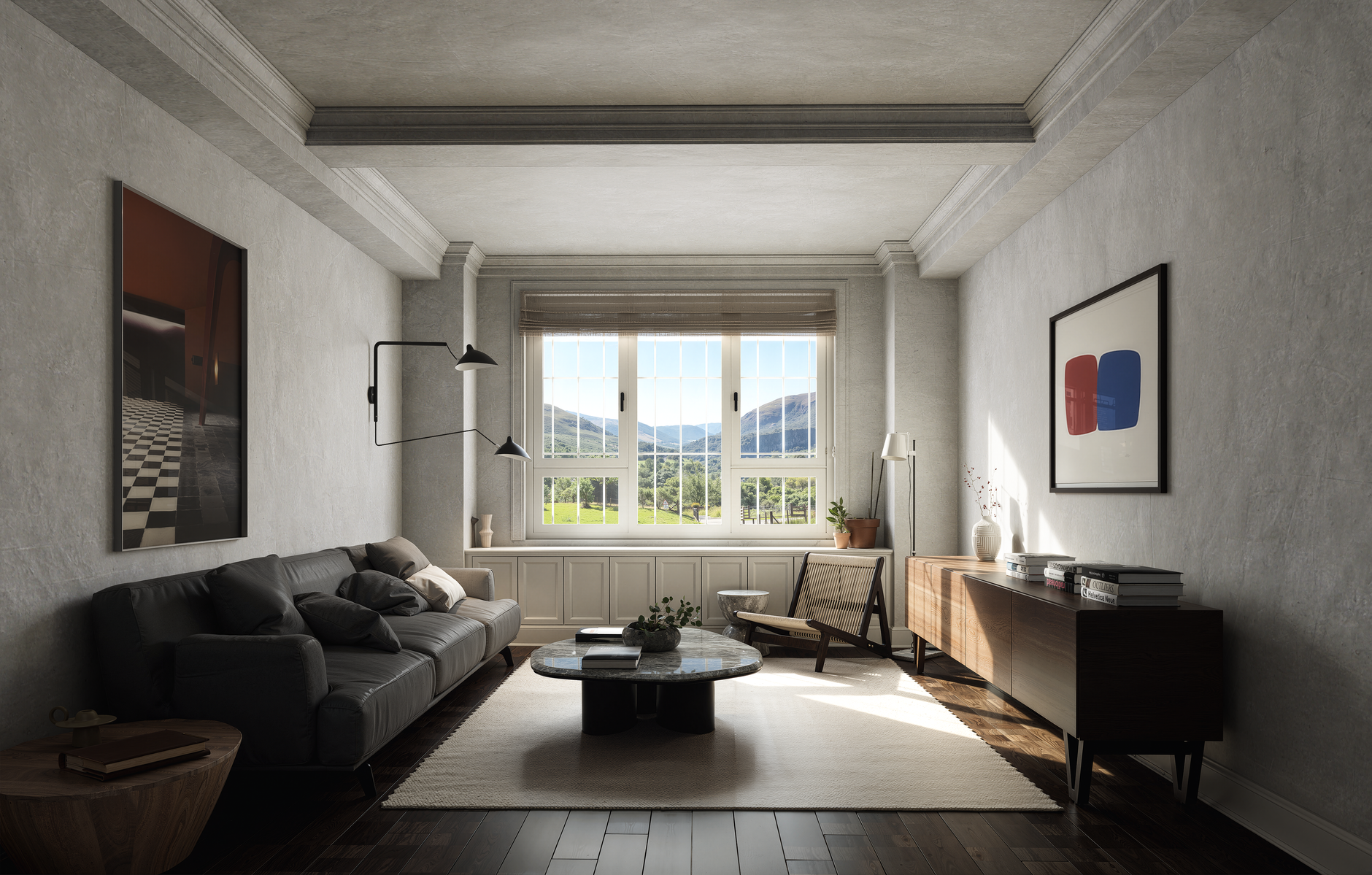
Start with shape. Silhouette does more heavy lifting than color, which is why a room photographed in black and white can still read as clearly mid-century or clearly traditional. Straight, tapered wooden legs and low horizontal profiles point one direction. Turned legs, rolled arms, and carved detail point another. Rounded, sculptural forms with soft edges suggest something contemporary and organic, while sharp geometry and exposed metal frames lean industrial.
Then look at how the shapes repeat. A single arched mirror means little on its own. But if the mirror echoes an arched window, a curved sofa back, and a rounded planter, you are looking at an intentional language rather than a coincidence. Styles are built on this kind of rhythm. Count the repetitions before you decide what a room is trying to say.
Lines of sight matter too. Minimalist and Scandinavian rooms leave air around objects and keep surfaces clear. Maximalist and eclectic rooms fill the frame with layered pattern and closely spaced pieces. Neither is right or wrong, but the density of a room is itself a clue about the style it belongs to.
Materials And Textures
Material is where a style stops being a picture and starts being something you could touch. Raw, unfinished surfaces read differently from polished ones, and most styles commit fairly hard to one camp. Reclaimed timber, blackened steel, and exposed brick belong to industrial and rustic looks. Lacquered wood, veined marble, and mirrored finishes belong to glamorous and mid-century modern interiors. Rattan, jute, and unfinished oak signal coastal or organic modern spaces.
Texture is the quieter half of the same story, and it is easy to overlook because it barely registers as a decision. A boucle chair, a nubby linen curtain, and a hand-knotted rug all add tactile weight that photographs as softness. Smooth leather, cool stone, and glass do the opposite. When you study interiors online, this is the layer most people miss, which is partly why staged and professionally shot rooms feel so complete; careful Property Photography tends to capture the interplay of matte and sheen that makes a texture palette legible. Train your eye on that contrast and you start to see it everywhere.
Pay attention to how many materials share a room. Two or three, repeated across pieces, usually means a disciplined style. A wider mix can still be intentional, but it asks the other elements, shape and color, to hold the room together. If you feel a space is chaotic, an overcrowded material list is often the reason.
Naming Your Style
Once you can read the clues, put your own home to the test. Walk through a room and write down the recurring shapes, the dominant materials, and the two or three textures you keep touching. Do the same for a handful of interiors you save and admire. The overlap between the two lists is your actual style, which is often more specific and more consistent than the label you would have guessed.
Expect surprises. Many people assume they are drawn to one look and discover their evidence points somewhere adjacent: not quite farmhouse but warm transitional, not strict minimalism but pared-back Japandi. The names matter less than the pattern underneath them, since the pattern is what you will use when you shop for the next piece.
Your next step is small and concrete. Pick one room, photograph it plainly, and list every shape, material, and texture you can spot. The list you build will tell you what style you already live in, and exactly which one clue to change first.